
Today’s article is a guest blog by Rob Panariello. Rob is a regular contributor to this site and many of my readers highly value his wisdom and expertise. This article pertains to the training of the high school athlete.
Robert A. Panariello MS, PT, ATC, CSCS
Professional Orthopedic and Sports Physical Therapy
Professional Athletic Performance Center
New York, New York
Throughout my 30+ years of practice in the related professional fields of Orthopedic and Sports Physical Therapy and the Athletic Performance Enhancement Training of Athletes, I have been witness to numerous senseless injuries that have occurred to the high school athlete as a result of their participation in a prescribed athletic enhancement training program. In addition to the experiences of my career, my belief is also based on the fact that my partners and I presently own and operate 17 physical therapy facilities, which also include 18 High School contracts. Therefore, it’s no surprise we rehabilitate a significantly high volume of injured high school athletes. Unfortunately, a significant number of these athletes walk though our doors as a result of their participation in an athletic performance enhancement training program.
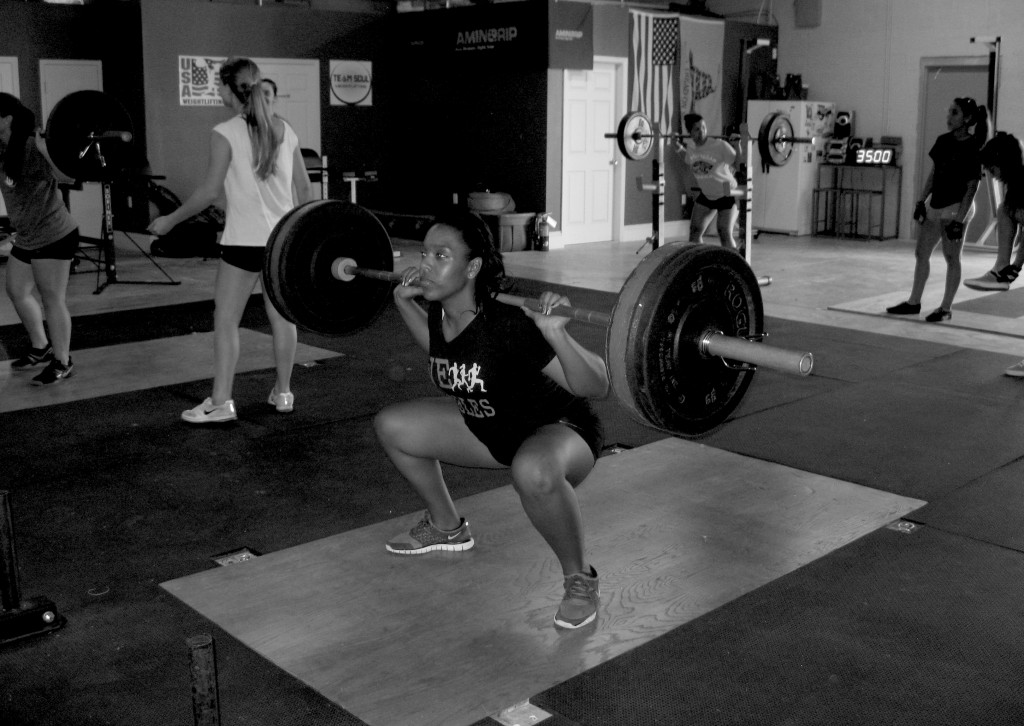
Over the years I have read articles, internet blogs, been witness to presentations, and have been involved in many conversations with regard to how the performance of specific exercises place the athlete at increased risk of injury. I personally do not agree with many of these types of statements as it should be noted, based on the experiences of both my career and professional business practice, those athletes who arrive at our clinics with performance training injuries have displayed an assortment of injuries located at various anatomical areas of the body including the cervical spine, shoulder, thorax, low back, knee, ankle, foot, etc. These injuries also transpired during vast array of exercise performance categories, i.e. double leg, single leg, push, pull, strength, power, speed, etc., and include the utilization of various exercise training implements i.e. trap bar, barbell, kettlebell, dumbbell, machines, medicine balls, sleds, etc. Perhaps we as Strength and Conditioning (S&C) Professionals should look beyond the specific exercise of performance, exercise category, type of exercise implement utilized, or the various other “explanations” as the primary entity responsible for the unfortunate and untimely injury that may occur to the high school athlete (or any athlete) as a result of their participation in an athletic enhancement training program. Perhaps we should also reflect upon some other possible causes of injury that may also be accountable during the athlete’s participation in a prescribed athletic performance enhancement training program.
The S&C Professional may consider the following guidelines during the preparation and application of the athletic enhancement training program design in the high school environment.
The High School Athlete Should Be Evaluated Prior to Their Participation in an Athletic Performance Enhancement Training Program
At the time of the medical history review with the injured athlete, an alarming number of high school athletes state that no pre-program evaluation was performed prior to the initiation of their weight room participation. Many athletes also stated that they were just taken to the weight room and required to perform various weight loaded exercises, some of these exercises included those which they had never performed prior to this initial workout day. Some athletes also stated that they were required to “max out” (i.e. perform an exercise 1 RM) on the initial workout day for the establishment of their training goals.
If an evaluation were not performed prior to the specific development of the program design, how would a S&C Professional acknowledge the demonstrated physical assets and deficits presented by the athlete, as well as determine the specific goals to be achieved by the athlete? If an exercise was performed with poor technique, or had never been performed prior to the initial training workout, how would one expect to apply high loads to the athlete with such poor execution of these training exercises?

The High School Athlete Must Be Prepared for the Initiation of a High Stress Athletic Enhancement Training Program
Just as a freshman student would initially enroll in a “level 100” subject course class in preparation for the further study of the same subject “advanced” level (i.e. level 200, 300, and 400) course classes, wouldn’t it be also necessary to physically prepare the high school athlete for the eventual prescription of advanced exercises and high exercise intensities prior to the actual application of these advanced level exercises and exercise intensities to be eventually performed by the athlete?
Years ago while studying in the former Soviet Union at Moscow’s Institute of Physical Culture and Sport, the former East Germany, as well as Bulgaria, and during discussions (via an interpreter) with Bulgarian National Weightlifting Team Coach Ivan Abadjiev, these experts placed an emphasis upon the necessity for the young athlete to participate in a General Physical Preparation (GPP) program design prior to the programed application of advanced exercises and high exercise intensities. My good friend Hall of Fame S&C Coach Al Vermeil has instilled upon me this very same training program philosophy. The “preparation period” of training will ensure the establishment and/or enhancement of the essential physical qualities of mobility, strength, exercise performance technique, as well as the development of an improved overall work capacity of the athlete. Preparing the high school athlete for the ensuing prescribed training program will likely result in a safer and more reliable training environment. The training philosophy of just “throwing” the high school athlete into the prescribed performance training program and see if they “sink or swim” may result in more life rafts than the S&C Professional may have anticipated.
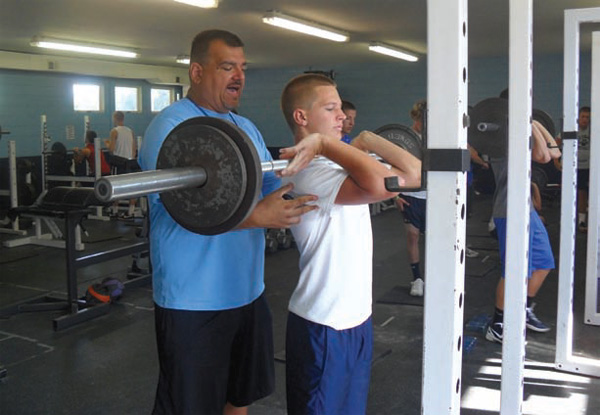
An additional benefit of the prescribed preparation period is that it may also assist to prevent the elimination of highly valued exercises from the training program design. Statements such as “ don’t squat because the squat exercise will injure the athlete’s low back” or “don’t overhead press because the exercise will injure the athlete’s shoulders” as well as many other similar “exercise taboo” comments are remarks I have also frequently been witness to. Each athlete should be considered as an individual, as certainly not every specific exercise may be appropriate for every athlete (i.e. the significance of the evaluation). However, with that said, wouldn’t it make sense to prepare the anatomical area(s) in question, i.e. the low back, the shoulders etc., via a preparation training period so that the possible utilization of these “valued” exercises may eventually be incorporated safety and appropriately into the athlete’s training program? Does it make any sense to just simply eliminate these types of highly valued exercises from the athlete’s training program when a prescribed preparation period of training will possibly allow the athlete to execute these esteemed exercises safely and efficiently? The athlete’s ability to perform the most “ideal ” exercises for enhancement of their various physical qualities will certainly provide them with the desired optimal results from their work efforts.
The High School Athlete Should not Be Trained as a “Little Adult”
There may be times where S&C Professionals as well as the sport coaches may possibly base their training program design upon the information they ascertain from clinics, conversations, articles, purchased training products, Internet sites, or from their own training experiences. Frequently these program principles and exercise prescriptions/designs are those utilized by older athletes (i.e. college and pro) and yet are incorporated into the younger athlete’s training program. As high school juniors and seniors have likely entered puberty and have some initial years of training experience, the same may not be said for the high school freshman and sophomores whom may have limited, if any training experience at all. Yet all of these athletes may be trained not only with the same program design, but also with a program design that may be more applicable for the more “experienced” older athlete. Many high school athletes have neither the physical, mental, or emotional stature of an adult athlete, thus they should not be trained as such or as a “little adult”. Younger, less training experienced athletes cannot be expected to perform the same program design as their older, more experienced athletic peers.
Emphasize Quality and not Quantity During Training
The quality of the high school athlete’s exercise performance correlates to the mastering of the exercise performance technique. To apply a high exercise intensity to an athlete with a poor exercise technique is certainly a recipe for disaster. Proper exercise performance (technique) will not only reduce the likelihood of training injuries but also allow for energy system efficiency, optimal recovery, and when appropriate, for the eventual safe application and efficient exercise execution of higher exercise intensities as prescribed in the athlete’s training program design.
Excessive exercise performance quantity (volume) will likely result in undesirable high levels of accumulative fatigue, as well as the undesirable negative attributes associated with an athlete who demonstrates excessive levels of fatigue.

Prescribe Appropriate Levels of Exercise Performance Volume
Exercise training volumes and intensities go hand in hand. Certainly both criteria result not only in a training adaptation, but may also result in excessive body fatigue. In my experiences with regard to the review of the high school athlete’s training program design, I have observed too many training program designs that contain excessive volumes of prescribed work. Unfortunately the “more is better” philosophy is often incorporated into many a high school athlete’s training program design. Unwarranted levels of prescribed exercise volume will likely lead to the aforementioned excessive levels of fatigue. Excessive fatigue will result in, but is not limited to, alterations in proprioception and joint (anatomical) position sense bringing about inferior exercise performance techniques, decreased exercise force output, as well as prolonging the young athlete’s rate of recovery. The accumulation of these factors may result in the consequence of a training injury. Any coach can make an athlete tired. One aspect to the art of coaching is to have the athlete produce repeated optimal levels of exercise performance over prolonged periods of time.
Don’t Make Powerlifters or Weightlifters of the High School Athlete
Unless the high school athlete is specifically participating in the sports of Powerlifting or Olympic Weighlifting, is it necessary to create powerlifters or weightlifters of them? Although the application of “unaccustomed” stress (intensity) to the athlete is necessary for adaptation and the desired enhancement of the various physical qualities of the body, is excessive maximal loading a crucial element of the training process? The S&C Professional should bring to mind that we are utilizing the principles and exercises of Powerlifting and Olympic Weightlifting to enhance the athlete’s athleticism with the expectation of transfer for an overall improvement in athletic performance (skill).

Athletes participating in different sports of competition as well as the different positions/events of their particular sport of competition, will likely require different “levels” of the various physical qualities trained. A successful high school 100-meter sprinter will not likely have the “absolute” strength levels of a successful high school football lineman, but it is also likely that the football lineman will not have the elastic qualities or speed of the sprinter as well. Not all competitive high school athletes are required, or desire to become Powerlifters or Olympic Weightlifters, nor is it always necessary for these athletes to execute the same high weight intensities of their peers.
Be Sure the High School Athlete Recovers from Their Workouts
The high school athlete’s body and CNS must assimilate and adapt to the prescribed training program performed repeatedly over time. Advanced levels of training experience will usually result in optimal levels of exercise technique and work capacity during the training exercise performance. Ideal exercise technique will result not only in faster physiological adaptation, but also the development of more efficient neuromotor patterns resulting in less energy expenditure and a more rapid recovery. Younger less experience athlete’s may require additional time for recovery as the lack of training experience may result in an inefficient exercise technique performance leading to higher levels of energy expenditure.
In addition to such recovery components as proper nutrition, rest, etc., age and gender should also be considered in the recovery of the high school athlete. Younger aged male athletes as well as their female athlete counterpart will have lower levels of testosterone. These decreased hormone levels may result in the necessity of (a) a decreased amount of training (work) that may be tolerated/performed over time by these athlete’s and/or (b) the necessity for longer recovery periods when compared to their older more experience training peers.
It is often acknowledged that the reason why some elite athletes utilize anabolic steroids is to further enhance their physical qualities during training as part of their effort for continued success. What we often overlook is that the original rationale for the utilization of anabolic steroids in sport was to improve the athlete’s ability to recover after strenuous training and athletic performance. I am not, nor ever have been an advocate for the utilization of PED’s by athletes for the purpose of athletic enhancement. The above statement is just an indication of another example of the importance (i.e. the initial reasoning for the use of anabolic steroids) for the athlete to achieve a sufficient level of recovery prior to the initiation of a subsequent intense training session.
By comparison, the number of high school athletes participating in athletic competition exceeds the number of college and professional athletes participating in athletics simply by the process of (athletic ability and skill) elimination. Many high school athletes will not advance to participate in organized college or professional athletics. We as S&C Professionals should not reduce the high school athlete’s limited time on the playing field by having them spend a portion of their valuable time rehabilitating performance training injuries.


One of the better articles on training youth athletes I’ve ever read. Awesome work!
Thanks Ryan, I appreciate your kind words.
Rob
I wish we had this sort of sports training when I was at high school. Over here in the UK we don’t even have these kind of coaching classes after we’ve left school, never mind at school. I would love the help of a professional coach who actually knew what they were talking about. Most of the personal trainers over here aren’t fully experienced in the area of weight training.
Great article Rob.. well thought out.. instead of the usual slam-bam “little-adult” type of articles about training young athletes.
A couple of additional things that S&C coaches & individual coaches should encourage their athletes to do are to not specialize so early in one sport and to take some time off from a particular sport when the season is done. Take a look at this great article with Dr. James Andrews.
http://www.cleveland.com/dman/index.ssf/2013/02/noted_surgeon_dr_james_andrews.html
Too much of a good thing can make it as bad as too much of a bad thing. Overuse injuries that last a life time and limit healthy habits can be as bad as our human nature to overindulge in all the food that surrounds us.
Bob,
Thanks for posting the article. I am familiar with it and it’s funny that you post it as I’m attending a conference here on Long Island tomorrow where the keynote speaker is Dr. Andrews.
I agree with you 100% as #1 pathology/post-op surgery we see in the young throwing athlete at our clinics is by far due to overuse. Based on my experiences, too many parents live through their kids. Even the parents pushing their kids with the intent of thinking it is the right thing to do, I have found if the child isn’t physically injured, they are likely setting them up for injury as well as inducing excessive fatigue thus decreasing their athletic performance. We train a number of college, minor league, and major league baseball players during the off-season, many of them successful pitchers, and many of them didn’t start pitching until later in their baseball career.
Parents need to understand the following:
1. All professional athletes have an off-season. Even in the workplace most employees do not work 7 days a week, they have the weekends off. Athlete’s need time off to recover from induced stress as recovery is as important as training/playing.
2. The ability to achieve a college scholarship is difficult and to make it further to the Pros is very rare. During my 10 years as the Head S&C Coach (1986 to 1995) at St. John’s University in NY I am of the opinion we were the dominant conference (The Big East) in NCAA basketball. Although we had many players make it to the NBA, I can tell you we certainly had our number of scholarship players who not only didn’t make it into the NBA, but were busts at the college level of play.
3. The same can be said at the Professional level. During my years working with my good friend Johnny Parker at the time he was the Head S&C Coach of the NFL’s NY Giants, there were a lot of free agents from smaller schools who may have bee the “big fish” at the small school, but clearly were not even close to having the talent to play in the NFL. The Giants, like all other NFL teams also had their share of draft pick disappointments as well. We are all also familiar with some big time college players who never made it at the NFL level.
Unless a parent was a big time college or professional player, they have no idea what it takes to get to compete at these levels of competition.
One last thing I’ll leave you with is that during my time when I was involved with research at the Hospital for Special Surgery in New York City we performed an 11 year post-op ACL reconstruction study. We brought patients back who had their ACL reconstructed at an average 11 years post-op. The majority of these patients had maintained excellent ligament integrity, had minimal or no knee pain, good strength and were able to “function” well. The majority of these former patients rated their knee as either good or excellent. One question we asked as part of this study was “after your ACL reconstruction where you able to return to your previous level of play”? With such good objective scores and the patients self- rating their knee as good to excellent, we were surprised with how many former athletes reported that they COULD NOT return to their previous level of play after ACL reconstructive knee surgery. After further investigation this is what we found.
During my time at HSS our Residents and Fellows, and at the time, athletic trainers would cover the New York City Pubic School Athletic League (PSAL) High School football games. Many of these football players, including a lot of high school seniors had torn their ACL while playing football during a high school practice or football game. New York City, unlike Florida, Texas, etc… is not the MECA for high school football. What we found was that although the athlete had good objective scores and a self rated good to excellent knee after ACL reconstruction surgery and rehabilitation, the #1 reason why the athlete could not return to their previous level of play is that upon high school graduation they were NOT GOOD ENOUGH TO PLAY AT THE COLLEGE LEVEL.
Parents should just let their kids enjoy and play sports at the level they can play. If an athlete is good enough to play at the college or professional level, trust me, coaches will find them. If they do not possess the athleticism and skills to compete at an advanced level of competition, let the kids enjoy their high school years. Most parents have no idea what it takes to compete at the higher levels of competition and unnecessarily push their child in an attempt to achieve these levels.
Just my opinion.
Rob
Not one mention about diet/energy drinks & supplements? & the toll they can have on damaging joints & stiffening connective tissues. THEY DESTROY THE BODY.
Rob needs to dig deeper.
Andy,
I appreciate your comment re: nutrition and energy drinks. My writing style is based on my experiences of performing and publishing research. Define what you would like to investigate, establish your methods, and report your findings specifically upon the results of your specific topic of investigation. Essentially don’t be “all over the map” so to speak as there are always numerous related topics that may be included in any article or investigation.
With regard to the topic of training the high school athlete certainly components such as nutrition, PED’s, etc… are important topics, as well as others, to educate the athlete in training. I certainly agree that the topic of nutrition should be reviewed and discussed (which we do) with both the high school athlete as well as the parent(s).
The purpose of my article was to provide specific suggestions to the S&C Professional that could be performed by them i.e. an evaluation, prepare the athlete, control programmed exercise volume and intensity, and allow the athlete to recover prior to the subsequent high stress training session, in the “controlled environment” of the weightroom. These criteria can definitively be instituted and implemented when the athlete is under the S&C Professionals direct supervision in an attempt to reduce training injuries.
I do agree with your post regarding the importance of the topic of nutrition with regard to the high school athlete. This topic is certainly an article within itself and I invite you to write such an article and send it to Bret for his review and possible posting. I for one would be interested in your thoughts.
Thank you for your post.
Rob
id dare say andy wont be writing ANY article based on that post he made.There is zero evidence any of those things damaging/stiffening either joints or tissues,although soft drinks in particular arent healthy.Diet of course is an important issue but its a whole field in itself,you could only cover a specific aspect of it in an article
Great post Rob. Couldn’t agree more. Privilege to have spoken with you previously – thanks for sharing your wisdom w/ the community.
Dan,
Thanks for the kind words. I enjoyed presenting with you as well and I look forward to working with you once again in the future.
Rob
The weight training programs have come a long way over the years and Bret you’re right, it makes perfect sense to have freshman take an entry level instructional class in proper lifting and technique’s before moving to the more advanced or intense weight training programs.
Training programs would then have to be adjusted depending on the gender and age of the individual. It is not right to push your body, believing that you will perform better, if there will be a lot of consequences later on. Abuse or excessive workout may result to injuries that might develop in the future.
Rob,
How long do you recommend training for GPP until you move into a more advanced program? Thanks.