
* Update as of 12/25/13 – This post was written in January of 2010. Four years later, I’ve learned a great deal about back pain. To the point where this article is laughable. There’s much more to pain than biomechanics and posture. Please read up on the biopsychosocial model of pain, along with the neuromatrix (in fact, I’ve written on these – click on the low back reconditioning tab). .
That said, I will keep this article simply because 1) the advice can indeed help certain people with back pain, and 2) it’s a testament to my constant strive for continued learning and education. One last thing – don’t become fearful of movement as this can lead to more pain. Movement is your friend – start with pain-free movement and then expand your boundaries
At some point in time, 80% of people will suffer from low back pain (LBP). As a trained specialist who watches people move all day long, it is blatantly apparent why such a large percentage of people have low back pain: They don’t move correctly! The root of the problem is this:
People move with their low backs instead of their hips!
When the low back moves and the hips stay locked up, the gel inside of the lumbar discs propels toward the outside of the disc and can cause bulges or herniations. This is often the source of lower back pain.

The solution is not as simple as simply learning proper mechanics. Many people are unable to move with proper mechanics due to poor mobility and motor control. It takes some time to reprogram the body to move correctly.
In this blog I will teach you how to get rid of back pain by combining seven different strategies. Since this blog is intended for the common person, I will refrain from using too much technical terminology and try to keep it simple. In the interest of brevity, I will exclude specific exercises and drills, as this blog is intended to entice the reader to learn more about each strategy listed.
1. Improve Soft-Tissue Quality
Over the years people have built up adhesions and scar tissue that needs to be cleared. Furthermore, trigger points need to be desensitized. A muscle cannot function optimally if it has adhesions, scar tissue, and trigger points. By using self-myofascial release (SMR), which is simply a technical term for a “poor man’s massage,” you will restore optimal tissue quality and allow proper functioning of the muscle’s nerves and blood flow.
There are two ways you will address your soft-tissue quality. First, you will use a foam roller. You will roll out your entire back, including the erector spinae, lats, rhomboids, and traps. You will also roll out your glutes, hamstrings, calves, quads, IT band, hip flexors, adductors, and pecs. A simple Google search will allow you to find pictures and videos of foam roller drills for each muscle group.
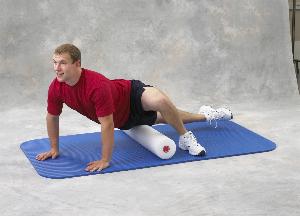
And second, you will use a tennis ball or better-yet a lacrosse ball for more targeted therapy. You will use the ball to focus on the arches of the feet, the calves, the upper glutes, and the mid scapulae.

Although you can find many different drills on the internet for SMR, the best way to learn the correct application of the foam roller and lacrosse ball is to simply buy them, get on them, and start moving around. Your body will show you how to use them!
2. Improve Soft-Tissue Length
There are many different opinions in the fitness industry regarding the role of static stretching, but I believe it’s the best way to turn off inhibition and increase flexibility. Two main points to static stretching is to learn how to relax into the stretch and to combine rotational aspects into common stretches (PNF techniques) in order to kill two birds with one stone by stretching multiple muscles simultaneously. Never stretch so aggressively that you end up stretching ligaments! In particular, hamstring flexibility and hip flexor flexibility are critical components to minimizing low back stress.

3. Activate the Glutes
Many people have weak glutes. The glutes don’t like to contract unless need-be. They like to let other muscles such as the hamstrings and quads do a job and stay dormant unless you force them to contract. Years of inactivity and sitting (which shortens the hip flexors and causes more glute inhibition) cause the nervous system to literally forget how to use the glutes.
Use two different strategies to increase your mind-muscle connection for the glutes. First, incorporate loadless training into your arsenal, which is just a fancy term for “flexing your glutes.” Seriously, start squeezing your glutes as hard as possible every ten minutes or so throughout the day. Hold the contraction for around one second and then shut them off. Do this around three times during each “session.” This will equate to around 300 maximal isometric contractions per day and will go a long way toward increasing your glute activation.
Second, start doing low-load training which simply means start performing relatively simple glute exercises while focusing on high-quality glute contractions. Some good glute activation exercises include bodyweight glute bridges, quadruped hip extensions, side-lying abductions, side-lying clams, bird dogs, x-band walks, single leg glute bridges, and fire hydrants.

4. Increase Mobility and Stability in the Hips, Ankles, and Thoracic Spine
The best way to improve mobility is to add strength and therefore stability at new ranges of motion. By performing the right drills, you can simultaneously increase mobility and stability. Learn how to contract the muscles being stretched at the end range of a motion and pull the body into new ranges of motion with opposing muscles. There are many great mobility exercises that can easily be found online.

5. Learn How to Control the Core and Prevent Lumbar Movement
This could very well be the most important tip of all. Most people move by contorting their lumbar spines. Proper movement mechanics usually involves keeping the lower back locked into place (bracing) in neutral position while moving about other joints such as the thoracic spine and hips.
Even while exercising, most individuals have poor lumbar mechanics. They overarch (excessively extend) their low backs during squats, deadlifts, bridging, quadruped, lunging, and back extension movements, they round their lower backs (flexion) during deadlifts, bent over rows, good mornings, and reverse hyper movements, and they twist their lower backs during rotary movements. In all of these examples, this is improper mechanics.
Advanced lifters and high level trainers/coaches often have an insufficient understanding of lumbar mechanics. It takes much diligence to reach optimal core control but it is a critical component to moving, exercising, and eliminating back pain.
An excellent trick to learning core control is to perform anti-movement exercises. Anti-movement exercises teach the lower back how to brace heavily to resist movement and strengthen the core in a manner that uses all of the vital core muscles involved in bracing the core.
There are three types of anti-movement core exercises: 1) anti-extension, 2) anti-lateral flexion, and 3) anti-rotation.
Anti-extension exercises prevent lumbar arching and include front planks and ab wheel rollouts. Anti-lateral flexion exercises prevent lumbar side-flexion and include side planks and suitcase carries. Anti-rotation exercises prevent lumbar twisting and include Pallof presses.
Cable chops and lifts are valuable core exercises as well. These exercises should not be thought of as less difficult or challenging than traditional core exercises. If performed correctly, they are very hard.

6. Increase Hip and Leg Strength
Most people who suffer from back pain have strong backs, and that’s precisely why their backs hurt. They use their erector spinae musculature (back muscles) to lift things rather than relying on the glutes, hamstrings, and quadriceps. By strengthening the hip and leg muscles, the body will be encouraged to lift with the appropriate muscles. This doesn’t mean that the erector spinae will not be involved in lifting mechanics, as they will always contract heavily as stabilizers. However, the lumbar discs will be spared as the lower back will be stabilized to allow the muscles of the hips and legs to be prime movers.
It is imperative to start out with basic exercises and move up through the exercise progressions gradually. One must master bodyweight with a full range of motion before using extra load.

7. Learn How to Move Properly and Incorporate All of the Aforementioned Qualities Into Your Motor Patterns
Contrary to what is often said, one does not need to “lift with the legs.” The low back muscles are stabilizers, while the hips and thigh muscles are prime movers. It is perfectly fine to lift with the hips high as long as the lower back stays in neutral position. This simple act requires many of the qualities listed above, such as hamstring flexibility, glute activation, core control, and core/posterior chain strength. Learn proper movement mechanics and reinforce those movement patterns over and over until it becomes automatic. Finally, keep the load close to the body.

If people learn how to follow these steps, many lives could be improved dramatically. To give you a personal story, a 21-year old former client of mine (now he’s 23) was told by three different doctors that he needed to have surgery on his lower back. He was in and out of the emergency room and constantly taking pain killers. After three weeks of training with me, his lower back pain completely disappeared. Within two months he began performing loaded squats and deadlifts with 135 lbs. Within six months he was squatting 300 lbs and deadlifting 380 lbs. It is now two years later and he has never suffered a single bout of lower back pain despite lifting heavy week-in, week-out. While this story isn’t the norm, it clearly shows that low back pain can be alleviated and a LBP-free life is possible if the correct strategies are employed.

Nice tips! Thanks!
Good info…
Proper exercise using low impact methods like Yoga or Pilates can provide the flexibility and strength you need in the various areas that are problematic. Yoga can be especially well suited of you are under a great deal of stress from work or other issues.
Best,
Gravity Gardener
http://gravitygarden.com/back-relief-pain/index.html
Brett nice job on the article.you mentioned about s.m.r work using a lacross ball under the arches of your feet.how does that influence or aid in recovery of Lbp? Thankz and catch you on the sc forum.
There is a string of fascia called the Superficial Back Line (Anatomy Trains – Thomas Myer) that runs from the underside of the toes, up the back of the leg to the sacrum, up the back to the skull, and over the skull to the forehead. By exerting pressure on the arches of the feet, it may cause the rest of the fascial line to relax and allow for a greater stretch in muscles like the hamstrings. This would allow you to move, bend, and lift properly which would reduce pressure on the low back. Try it and see if it works; bend over and see how far you can stretch (toe touch stretch). Roll out your feet, then repeat the stretch to see if your flexibility improved. Most notice instant flexibility improvements.
Hy Bret. I just starting reading your blog and i’ve discover this article. I was diagnostic with 2 bulging discs, and since i was sure that my wheight training is kinda over(i’m still training but with small weights and evoiding exercises like rows, squats, deadlifting) i try to do bodywheight training chins, inverted rows, etc..I read in your article that a former client suffered from a low back pain and after training with you he had recovered, maybe you can offer some tips about how was his routine and what kinda of exercises has he done for recovering. I don’t have huge pain or nothing like that, just some sciatica, one or two times/mont but low back pain is there, and i have somthing like a permenante soreness in the moscles of the lower back( not the erector spinae) the other muscles deeper that are stabilizing the spine and the hips..
Sry for some grammar mistakes..i’m from Europe.
Hope you’ll take a look at my story.
THX.
Cris – The best possible thing to do would be to see a quality physical therapist. They can work wonders. There is a reason why you have those bulging discs and you must get to the bottom of it. You can certainly build a great physique and tons of strength and power with just bodyweight exercises, so don’t feel like you have to go heavy. If you do start to incorporate heavier lifting back into your workouts, always use picture perfect form. Make sure your hip mobility, core stability, and glute activation are up to par! Progress gradually back into things if you go that route! Best of luck.
Ab routines are a excellent way to build confidence in your body as you can see the improvements happening. So many people have shame and a lack of confidence in their appearance.
Another great tool I started using recently is “The stick” ( easy to carry around to events as well!) and of course, I always refer to “the trigger point therapy workbook” by Clair Davies.
Yep; the stick works great! And Clair’s book is a classic.
Great article. My son is a pitcher and keeps reinjuring his low back. I had not thought of using the Pallof Press to help with anti rotational stability. We will be incorpaortating it into our planks and hip/upper thoracic mobiliy work.
Also, where do you get the pad for barbell that you use when you do weighted glute bridges.
Thanks
Rick
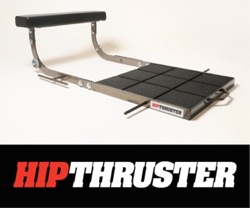
Thanks Rick! The pad is a Hampton thick bar pad. It’s a must-have if you plan on doing hip thrusts or barbell glute bridges! Makes an excruciatingly painful exercise pain-free.
You write very interesting and captivating articles but one problem; with this article in particular, it mainly states preventative methods for lower back pain. What about after the herniated or bulging disc has occurred? Thanks in advance and keep up the good work
These are great tips
Hi Bret,
I have scoliosis(10 degrees) which have caused my right lower back and left upper back to become weaker. As a result my left lower back and right upper back are always in constant pain due to the extra stress. I used to workout out religiously but for the past 2-3 months my upper back would start swelling and running my hand across I can feel lumps and tightness. Is there any tips or advice for me? I am desperately looking for a cure and I have tried physiotherapy.
thank you for your time,
jef.
Bret,
Any good ideas about how to get people to squat fully without their upper body pitching forward? I have been using doorway squats and band work (FMS Gray Cook) to help.
Thanks!
Erik
Erik, I have Gray Cook bands too, which can be useful, but it really just takes practice. It’s usually a combination of poor mobility and/or stability at the ankles, hips, and t-spine. You just have to keep reinforcing good form over and over. I like to use mobility and activation drills in addition to squat variations that individuals can do well (usually box squats) so I can provide a good training effect.
Hi Bret,
Just started reading your blog and I’m very impressed with your knowledge! I was just diagnosed with a labral tear and FAI in my L hip which hasn’t improved with PT. It’s very disheartening because I know I’ll be sidelined for a while (as I pretty much am right now) but as I’m reading a few of your posts, it seems that my LBP could be a direct result of those hip injuries and how they reduce my hip ROM and seemingly robbed my L glutes of power. I feel stuck because I want to progress with training my lower body and improving my form but don’t have the ROM to even perform a dead lift correctly! Have you heard of a correlation between the hip labral tear and LBP?
-Maddie
Maddie,
This isn’t a stretch in your imagination at all. Hip dysfunction is very closely linked to lumbar dysfunction. Serial distortion patterns creep their way through the body…in this case the hip problem only had to creep directly above (well…hip, sacrum, pelvis, lumbar spine, you get the idea). Anyway any loss of ROM at the hip will result in compensatory movement in the spine during movement.
You need to find a quality PT or strength coach in your area who knows how to deal with your situation. I’d say you need to gradually restore hip ROM and stability and then work on progressively advancing the exercises in range of motion, repetitions, and eventually load. The degree of degeneration in the labrum matters and you need a qualified person to help fix you. Maybe your PT wasn’t that good? Just speculating.
Hi Bret.
Bret, when doing stretchs, how do I know, i´m stretching the hip flexors and not the quads?
Bret, I would assume, by the same token, that dysfunction in one of the shoulders can cause dysfunction in the hip/glute? Would it be the ipsilateral or contralateral hip? I was thinking contralateral due to the thoracolumbar fascia connection.
Hi
Thank you for the information having had a disc bulge for 6 months I have been seeing an osteopath which has costs heaps of money but is still no better in fact getting worse by the day because of no exercises and I am a cleaner for 15 years and am struggling to clean everyday now
Please could you recommend a good therapist for me I live in Coogee nsw and need help as soon as possible
thank you
Thanks a lot for the information here. Do you have any thoughts about Whole Body Vibration Therapy? I have been hearing a lot about it lately and I wanted to know if it really is effective.
hi , i am having hip pain on my left side from past 7 months now. it all started during zumba sessions. i ve not been working out since then but my pain is not just going. i am going for walk everyday but have problem in any activity if it prolongs for more than 20 min. MRI of back and hip was clear/ no problem.
then wot can be the reason?
“If people learn how to follow these steps, many lives could be improved dramatically. To give you a personal story, a 21-year old former client of mine (now he’s 23) was told by three different doctors that he needed to have surgery on his lower back. He was in and out of the emergency room and constantly taking pain killers. After three weeks of training with me, his lower back pain completely disappeared.”
>>>
I’m curious, what problem did he have with his back? In your opinion, can a person with a herniated disk –especially in the lower back– do deadlifts and back squats? Thanks in advance 🙂
I am also interested in your example client. Did he have true chronic back pain, i.e several months duration or was it more of an acute injury?
Brett, Nice articles, Some of the exercises shown might be too hard to achieve for anyone with a severe spasm. When in too much pain a good walk might be too much. The self massage with the ball is a great tip. Thanks.