
This week’s topic is something that I’ve been thinking about for quite some time.
Nearly all strength coaches employ core training into their programming. The definition of “core” will vary from one coach to another. Some will say the muscles between the pelvis and ribs. Some will say the muscles between the knees and shoulders. Some will mention the inner and outer core. Some will include muscles such as the deep neck flexors.
Back to the topic at hand. Let’s say you have 60 minutes to train a group of athletes. Should you include a special component for core training? I realize that age, sport, number of days, training history, and individual weaknesses factor in here considerably. If you need more specifics, let’s say you’re the strength coach for a high school varsity football team.
Arguments in Favor
I’ve heard some coaches say that the core training component of a routine is the most important component for power production.
It increases core stability which prevents injuries on the field….everything from ACL injuries, hamstring strains, hernias, and low back pain could be due to core instability.
Core stability will help promote good exercise form and prevent weight room injuries.
Strong abs and glutes help prevent hyperlordosis and anterior pelvic tilt.
Specific core exercises exceed general strength exercises in EMG activity in the various core muscles.
The spine is the power center and drives everything. All explosive motions transfer through the core so to get optimal transfer you can’t have energy leaks or a weak core.
The spine must be prepared for battle, and this is done by getting the spine accustomed to high forces seen in the sport.
Core exercises can be seamlessly integrated into programs such as during interset rest intervals as active recovery or as a pre-workout activation method so it doesn’t take time away from total allotment.
Proper core training teaches individuals how to brace and maximize IAP which spares the spine.
The core produces a double-peaked “superstiffness” during explosive movement so we should train it to pulse properly for this purpose.
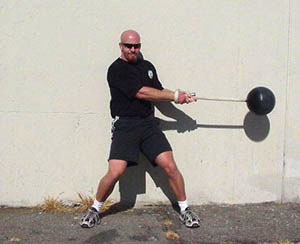
A stronger muscle is a stiffer muscle. Stiff muscles deform less.
Arguments Against
It doesn’t increase power; players spine’s aren’t buckling when they jump and run.
The core gets hit hard enough through squats, deadlifts, chin ups, push ups, farmer’s walks, front squats, overhead squats, and military press, and even moreso with unilateral variations of lunges, Bulgarian split squats, one arm rows, single arm bench press, etc. Good training IS core training. But plenty of core training is wimpy training that won’t carry over to sport.
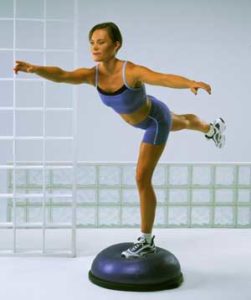
Sport specific skills are all about timing; extra strength doesn’t help much. Most activities don’t require a high percentage of MVC, thereby rendering extra strength as useless.
Rotation training just beats up the spine and adds extra stress.
Why put tons of spinal loading on players who are already loading their spines enough during practices and games?
In a perfect world we’d do all kinds of fancy core exercises but I have limited time with athletes and my time with players is better served by doing more general strength, explosive power, plyometric, agility, and speed work. Or better yet, skill work.
Why fatigue the core prior to a strength training session or before sets of more important “big rock” exercises which rely on the core to function optimally?
Instead of focusing on the spine, we’d be better served focusing on the hips. Replace anti-extension, anti-flexion, anti-lateral flexion, and anti-rotation exercises with hip flexion, hip extension, hip adduction, hip abduction, hip external rotation, and hip internal rotation work and your athletes would play better. Sport is all about the hips.
Some of the best jumpers and sprinters in the world never did core training. You need fluidity, such as that of Dominique Wilkins, Michael Jordan, and Carl Lewis. All this focus on creating robots to not move is ill-fated.
Some of the strongest Olympic weightlifters never do core training either. Obviously it’s not necessary as they’re the most powerful people on the planet. They spend their time exploding, not holding core isometric contractions.
Pulsing isn’t a wise strategy as we can’t mimic precise core timing/loading/vectors seen in sport.

My Take
I could go through almost every argument above and poke holes in them. However these arguments are what make our job so fun. Strength training is an art and a science. If I have 60 minutes to train athletes, I definitely include some specialized core work. But I only prescribe one or two sets of one or two exercises. Furthermore, I place the core exercises at the end of the program. Many coaches place them at the beginning.
As mentioned above, the core gets worked through proper upper and lower bilateral and unilateral exercises in the strength program. You don’t need much icing on the cake, but you have to admit, using the ab wheel or the Cook bar for some rotational work really taxes the core and just “feels right.” Adding in a couple of sets of these only takes up a few extra minutes of workout time.
What’s your take?

Bret,
I’m with you on this one buddy, it’s the last thing to go into a program. I think good athletes tend to be good compensators, which also leaves them open to injury and possibly sub max performance so for me core training falls into anywhere that needs the attention; shoulder retraction, internal hip rotation, anti spinal flexion etc.
I believe ultimately strength is most peoples limiting factor and if there is something preventing them from getting stronger then it needs addressing. Call it corrective, mobility, core whatever but it still needs doing.
I also think that there’s a whole psychological aspect to ‘core’ training. Regardless of what you think about it, clients and athletes want it! It doesn’t matter if a client has just set a new squat 2RM they’ll still want to do their roll outs otherwise they won’t have worked ‘all over’. In this instance can it really be so bad to include the odd bodysaw?
You hit the nail on the head with this statement!
I think fighters definitely need direct core work (static and isometric). Yes, olympic lifters are insanely strong, but nobody is trying to crush their ribs with body shots when they are on the lifting platform.
Ted
Great point Ted! When training fighters this must be taken into consideration.
isometric and concentric – sorry for the mistake!
I think sprints, jumps, and throws could be added to comment #2 in favor which means even more core work.
Does a half kneel on airex pad Cook bar exercise transfer to sprinting 11-12 meters per second down the track or going deep in the NFL?
Another great point Rich. And as for transfer…there’s a lot we assume in S&C. Research on core work and power/speed is equivocal.
I don’t believe that performing such exercises will have a “direct” transfer to sprinting. However I believe that they may have an indirect transfer.
Therefore performing such core exercises “may” keep your core stronger and injury free which will allow the individual to tolerate high loads more frequently of exercises that are considered to have a better transfer e.g. cleans, squats, plyos etc
Theoretically they could transfer a bit to sprinting via improved lumbopelvic stability and reduced transverse and lateral movement, though I’m not sure if elite sprinters are leaking anything there…there’s necessary 3-D joint motion that occurs and then there’s unncecessary motion. I doubt elite have any room for improvement but beginners and non-elite certainly may.
Chinese Olympic Lifters do a lot of ab work! Crunches, leg raises, etc…
Anthony, I know they do. I’ve seen their training videos and they do tons of sit ups, etc. But some Olympic lifters do none. For example, the Bulgarians didn’t do any back in the day. John Broz doesn’t have his lifters do any core work, etc.
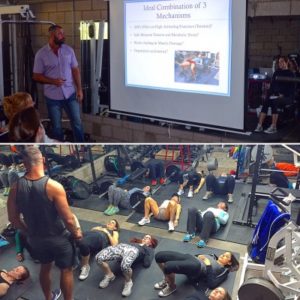
I was just fandoozled by the picture of the Chinese Olympic Lifter then 🙂
I probably shouldn’t have included that picture at that spot.
I think that core training is interesting depending on the function and the action to be developed.
Especially interesting is the recovery of injured athletes with the inner core work at low load and progress In
For strength training may be useful to be practical and work in function. The core works doing anything in normal conditions.
Greetings from Spain and congratulations for the blog.
Thanks Ruben, greetings from New Zealand!
Interesting that fighters are mentioned.
They need to have armoured abs for both protection and power generation.
I’ve found that the best place for direct core work, including rotational work is during their conditioning circuits.
I’m a huge proponent of unilateral strength training, esp for fighters, this does give them a powerful midsection without burning time and energy with extra work.
Would core movement exercises be more beneficial for hypertrophy than core stability exercises for ab armour?
I agree with you Bret. I do 1 maybe 2 core exercises per session for 2-3 sets. I find it’s also a great way to help clients learn to brace their core. Teaching them to brace while performing core stabilization exercises carries over to other compound exercises like squats and deads.
Kyle, I say the same thing…but does it really transfer? Oly lifters are some of the strongest deep squatters in the world. Does the core need tons of anterior and lateral stabilization during squats (rectus, obliques, etc.)? If MVC doesn’t fire maximally for those muscles during squats, then do we need more strength? I agree that the erectors need to be strong for posterior support, but what about the other core muscles? Just trying to invoke thought.
My feeling is that if I have 30 minutes to train, I probably won’t spend any time doing specific core work, but if I have 60 minutes, I’ll throw a few sets in at the end or in between sets of other stuff throughout the workout.
One thing that has not been mentioned yet that I think is important is the level of the lifter. In my opinion, beginners should definitely spend extra time doing core work while advanced lifters do not need to worry about it as much. I think the main benefits of core training are 1) injury prevention and 2) energy transfer. Beginners need to strengthen their core to be able the demands of exercises like squats, deadlifts, etc. so they don’t get hurt doing them. They need to learn how to brace correctly too, which is easily taught through most good core stability exercises. Moreover, the loads a beginner is using in their compound lifts are probably not enough to give the core the work it needs.
Advanced lifters, however, have learned how to brace properly and have learned effective technique on the major lifts, so they are getting more core stability work on the major exercises and are avoiding massive energy leaks caused my technical flaws. Likewise, they are using much heavier loads in their training, which works the core to a much higher degree. If you front squat 135 or do dumbell rows with 50 lbs, you probably won’t feel your core working too much. Front squat 315 or do dumbell rows with 120 lbs and your abs will be sore the next day. With that said, I still think advanced lifters can benefit from direct core training, but it’s not quite as important.
I could go on for awhile but I’ll leave it there for now.
Great thoughts Ben! Thanks for posting them.
Hey Bret!
Been following your blog for a good few months now but this is the first I have posted. Just thought I would share my own experiences with core training. I am an ex-endurance athlete (long distance runner and triathlete), but gave it all up last year in a pursuit of strength and muscle, and so converted to heavy strength training. Needless to say I have never looked back.
When I was participating in endurance sports, I also included a lot of traditional core work in my training schedule. I did little to no heavy lifting. My core was not strong, and I had very bad posture, and got a lot of back pain, which is not good considering I was only 22!
When I stopped my triathlon and running training, I also gave up my core training routine because I had been doing a lot of research and decided to follow the recommendations of the following article:
http://startingstrength.com/articles/core_stability_rippetoe.pdf
In less than a year, my core has become so strong, I have perfect posture, no back pain and bulging abs :D!
I now throw in the occasional plank variation, body saws or rollouts (just because I like them!).
I’m not saying that core training doesn’t have a place – I actually think it does, but in the world of fitness I think that too much emphasis is placed on gimmicky “core” stability training
Lauren
Nice article link Lauren! And great example of what good training can do!!! Thanks.
Nice article, Bret! I would certainly define core as extending from the shoulder girdle through the pelvis. Interestingly, Olympic lifters have to hold core isometric actions at lockout, so they have to control their core muscles through the explosive move through to motionless.
A coach or trainer needs to truly analyze the movement needs of the person. Sprinting or jumping alone probably need less core action than tackling, defending, or being knocked to the turf. In Highland Games, the different events impose slightly different demands: you’ll sure feel your core work while controlling a caber you’ve picked and are preparing to toss.
My opinion is that most people could benefit from 1-3 different well-selected core exercises relevant to the demands of their lives, performed for 1-2 sets (no more), at the end of the main part of their training session. However, if time is constrained that day, certainly keep the “meat” of the workout to get the most bang for the available time.
Great minds think alike 🙂
As you state Bret “to provoke some thought”…..
I was just recently speaking to Al Vermeil on a similar subject matter. Bottom line, in my opinion, when it comes to the knowledge of basic science and athletic performance, ability to teach, and experience and success, Al Vermeil is the best strength coach in the country, period.
Some considerations re: CORE, specific to athletics, meaning we are utilizing weight lifting and strength training to enhance athletic performance on the field of play, not trying to make weightlifters of our athletes:
1. When a joint flexes, extends, and rotates, should a specific joint ROM not be trained?
2. When statements of “posterior chain” emphasis is prescribed in training, as well as our knowledge of back extensor muscle activity that occurs during high intensity exercise performance (squat, dead lift, etc…) i.e. “erectors must be strong for posterior support”, are we creating a CORE “imbalance” if we ignore training the trunk flexors?
3. Discussions of trunk stabilization often mention the static support of the CORE system. If the “pillars” of strength (muscles and muscle fibers) are essential for optimal stabilization, then wouldn’t “larger pillars” provide greater stabilization? Is hypertrophy of a muscle optimally achieve through resisted movement i.e. ROM or through isometric/static training?
4. During athletic competition opponents usually face each other (offense to defense) during play. When hit in the anterior frontal plane of the body, one resultant motion of will be spinal extension. If CORE flexion training is ignored, will the abdominal eccentric strength suffice to resist and appropriately stabilize during such athletic contact at high velocity when forcing a violent spinal extension?
5. Do the majority of young college athletes, and young athletes in general, have “bad” backs? Are “young bad backs” the exception or the rule?
6. Do the majority of college athletes, who participate in some type of CORE flexion activities during their 4 year performance training career graduate with “bad” backs?
7.Do strength and conditioning/personal training professionals have as much of a concern with the high intensity loading and stress application of other anatomical structures and joints of the body as they do to the spine? Are ankles, knees, hips, shoulders, etc.., not as important for concern?
There certainly is a role for knowledge of various “fields of expertise” to make a professional an “overall” better coach, but are the principles and more specifically, the requirements of strength and conditioning the same as those for personal training or rehabilitation?
Thoughts?
Rob, I’m glad you brought up Al’s name. He asked me to email him a while back and I forgot to do so. I just sent him an email and come to think of it…I should have included you on it. I’ll send it your way right now.
In regards to your thoughts on this topic – to me it’s a separate issue and warrants its own “Topic of the Week.” I have tons of thoughts on this topic and will make this a topic of the week in the near future.
So let’s not start debating spinal movement versus spinal stability – let’s save that for down the road. For right now, the argument is whether it should be performed and if it should go first in the session, interspersed within the session, or last in the session.
Thanks Rob you rock! -Bret
Sorry Bret, I didn’t mean to jump the gun. I wasn’t looking to start a debate (though I certainly can see how that may happen) just putting out some thoughts, as I’m not saying I perfer or not perfer those methods.
In rgards to the “topic at hand” I am of the same opinion as Teresa, an appropriate selection and application of CORE activities performed at the end of the workout.
Rob, no need to apologize. I’m very thrilled to have you posting on my site. I hold you in very high esteem and am glad that us newcomers have a chance to read to your expertise.
I’m definitely with you and Ben Bruno on this. Beginners hardly need any core work and it certainly isn’t necessary if you only have 30min to train.
I’d set up a circuit of 3 core exercises (done 2-3 times through) using Mike Robertson’s recent article, 21st Century Core Training article, as a gauge to make sure I hit all the 4 different movements in a week.
Really, I think too much emphasis has been placed on the whole 6-pack and 8-pack abs craze.
You are so right. I’ve had clients who, when asked to catch me up on their workouts since last session, told me that they got their ab exercises in. For some of these people I had suggested they get up and do squats or lunges or pushups during TV commercials to help with their consistent exercise. No–no squats, lunges, or pushups–but they got their abs in.
Clients always love to perform a couple of ab/core exercises at the end of a session, which is another reason why I think it’s important to include them for personal trainer clients. The more a client likes the program, the more likely they are to be consistent. On this topic I think it’s wise to meet the client half way.
I look forward to being educated by all those who contribute to your site as well.
Everyone’s replies are spot on and I completely agree with your take on when and how to incorporate core training in a client’s program.
I’m sure it’s common, but I get asked by 95% of my clients to add MORE core work to their programs no matter how much work they do. I always respond by teaching them that almost every exercise we do IS core work in some way.
I typically add one movement to the end of a session that they have trouble with or I feel they can improve. We hammer that then work on progressions.
I frequently use TGUs as a solid warmup for some clients as well.
I would have to agree that I am seeing far too many trainers emphasizing “core ” training exercises that are more for client entertainment than benefit ( as far as I am concerned). I do believe that core training should be performed at/near the end of the workout. Fatiguing your stabilization system early in the workout can only lead to sub-maximal outputs on “meat and potato” exercises and lets face it you can’t shoot a canon from a canoe. I also think that when training the abdominal region in specific we should always work from lower abs to internal/external obliques to upper ( strongest to weakest). As far as sport specific training we need to consider the athletes application. ie- dynamic or static. I love full range of motion swiss ball sit-ups, woodchops, bridges etc.
Bret, I appreciate that we share the view that strength training is an art and science. Rarely does science appear artful or vice-versa. There are always compromises and critical decision making when choosing how to train a non-athlete or competitive athlete. I am impressed by the crowd that hangs around your site–very knowledgeable group! I may come from a different training background and so I offer up a slightly different perspective. If we look at core stability–the time-sensitive ability to create stiffness for transfer of force, then I would argue that there should be some attention to core training (specifically, core stabilization) early in a 60 minute workout. I don’t believe that the spinal muscles should be heavily taxed early on, but rather the workload should be intermittent throughout the workout. Core stabilization should be differentiated from core strengthening though. Prone lying back extension exercises will undoubtedly train core strength, however, without the external pertubation, there is no stimulus for feedback and feed-forward mechanisms that promote the time-sensitive core stiffness at a local stabilizer level. Perhaps this is a different topic altogether, but bottom line is that I feel some attempt at core stabilization should be made early in a workout–especially for a beginner. Thanks Bret for the stimulating discussion!
“The time-sensitive ability to create stiffness for transfer of force” – I like that! I clearly understand your point and you definitely make a good argument. I wonder though if the best developer of this ability is through the specific skill itself, rather than specialized drills. But of course, that argument could be made with everything and we know that different types of training can transfer. So great point!
Core workout is important for:
– Developing the strength and technique to resist unwanted flexion, rotation and lateral forces.
-The point above makes the athlete more stable, thus it lets him produce force and power more efficiently while reducing the potential for injury.
-And, even though the big lifts already have its share of “core” workout, specialize work for the core can teach the athlete how to improve its movement and stabilization (anti rotation, etc) in the field, thus making him even more able to produce power efficiently and reducing injuries that are tipical from the sport.
Another important point to mention is that, with postural deficiencies, the athlete wont perfom the big lifts correctly from a biomechanics stand point (due to length tension relationships being suboptimal), thus, if we dont work to get him an optimal postural alignment, he has a greater potential of injury and his core workout (if based only in lifting heavy) will be pretty much flawed, because of the wrong muscles having a wrong share of the work. This is something that lifting heavier wont fix.
This is my take on this, i would appreciate if you can point out any error in what i wrote.
Thanks for all the info in your articles Bret!
If a left hip problem including the Si joint is being caused by weak glutes and weak core…..should I address the glute imbalance first or work on my core. Or both?