
Hi Bret! Autoregulating training brings a question about the necessity(or not) of keeping a training log. I know I may be giving this subject too much thought, but couldn’t resist asking you. The reason I’m interested is, because training according to notes from previous training sessions could possibly negatively interfere with the autoregulatory process(adjusting the workout more by the numbers and details in the log, than the actual state of your body and performance).There are also some experts who don’t keep one or consider doing so necessary. Christian Thibaudeau for instance hasn’t ever used one. Louie Simmons doesn’t almost even allow his lifters to keep one. Plus there are plenty of bodybuilders who don’t bother themselves with it either. At times it makes me still wonder, whether a lot of lifters just get away with it among other things, because of the steroids.So, I’d like to know if you use one your self with your own training? And any other thoughts possibly. I decided to ask you, because you mention autoregulation often in your blog, which I like to read weekly. I understand if you don’t have the time to answer these questions.Thanks a lot! Jussi
Hey Jussi, this is a great question. I didn’t know that about Christian and Louie. Here are my thoughts on the topic.
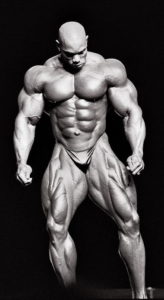
Pro Bodybuilders
For bodybuilders, keeping a log is not so important. Strength is critical for muscle growth but it’s not everything. Doing what many bodybuilders do and utilizing “instinctive training” can deliver excellent results over time. Once sufficient strength is built up, they don’t always go in and try to set PR’s. They learn to feel certain muscles working more during various exercises, and they aim to achieve an incredible pump. And since they usually do bodypart splits, switch up exercise order, and rotate variations in and out, it makes more sense to just hit the gym and go by feel rather than try to go up in weight or do more reps every session, since there are simply too many variables in play. In fact, keeping a training log might be detrimental to a bodybuilder, as it might entice a him to go too heavy. For example, let’s say that last time the bodybuilder did flies he used 70 lb dumbbells, but he did them second in his workout immediately following incline bench press. However, for the current workout, he’s doing them third in the workout, following bench press and dumbbell incline press, which would render him a bit weaker. If he tried to match or beat what he did on flies in his last performance he might end up injuring himself. For these reasons, I don’t believe that bodybuilders who have already achieved appreciable levels of strength must keep a training log. It’s fine if they do, but it’s not critical.
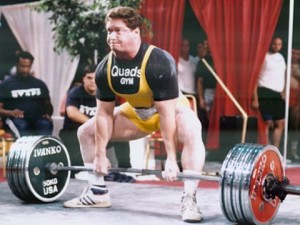
Powerlifters
Many powerlifters require a log to inform them of percentages that they’ll need to use during their training. Many lifters need these percentages for periodization purposes. Furthermore, many powerlifters perform dozens of slight variations of the powerlifts, either raw or equipped, and it helps to keep track of loads used for all of the different lifts. Finally, most powerlifters don’t just go in and “wing it.” They have either a definite plan or at least a basic idea as to what they’re going to accomplish in the gym. For these reasons, powerlifters should keep a log.
Athletes
For athletes, the process of keeping detailed records is very important. I’ve seen some impressive templates from coaches such as Mladen Jovanovic that are convenient and detailed. The devil is in the details, and the more you monitor and track, the better chance your athletes have of succeeding. All strength coaches should keep logs for their athletes.

Beginners
Many beginners can go into the gym and beat their previous effort every week for several months. They just need to know what they did during their last workout and they’ll beat it. Beginners have the worst memories as it pertains to lifting because everything is new to them. They’re not familiar with the names of exercises, the loads they used, etc. So training logs for beginners are essential.
Everyone Else
For everyone else, I believe that training logs should in fact be kept. Some guys have terrific memories as it pertains to lifting. They’ll forget their anniversary with their girlfriends or wives, forget to pay phone bills, etc., but they’ll remember exactly what they did on every set of their routine the previous week. However, most normal people struggle to remember the details. For example, I can’t remember what weight I used last time I introduced Zercher squats into my routine, or what I used last time I did cambered bar good mornings. It’s nice to be able to flip back and see what load you used and how many sets and reps you did. Another caveat is that the process of writing down your loads, sets, reps, etc. may help you better remember the workout.
Furthermore, for most of us progressive overload is critical. The average guy needs to get appreciably stronger in order to get more muscular. He can’t just go for a pump and haphazardly throw a few random exercises together and still see results. The process of keeping a log enables lifters to critically analyze their programs and see if they’re truly delivering results in terms of strength gains.
Finally, on the training log you can jot down important notes. For example, I like to write down which hole I did for box squats, which pin placement I used for rack pulls, the precise configuration of adjustment settings I used on a particular machine, or other notes such as “too light,” “too heavy,” “no chalk,” “crippled abs,” etc. For these reasons, I believe that most people should in fact keep training logs.
I keep mine pretty simple. I’ve been doing so for about 14 years now. Here’s mine below; I’m trying to get used to keeping records in kilograms.
Hope that helps! -Bret


Great post and as always, valuable perspective!
Thanks Allie!!!
I’ve been keeping training logs for over 30yrs.
Every training partner I’ve ever had who didn’t keep a log amounted a non-commited waste of gym space.
I would agree that the ones who keep a log are usually much more committed and stand the test of time.
This is a great post! I am training for my first bodybuilding show right nowand have been lifting 4-5 days a week for the last year. Up until a few months ago I kept a detailed log of everything I did and every weight I moved – I found the technique extremely helpful when I was starting off.
One day I forgot my log book and went ‘by feel’ (as you say bodybuilders do) and realized I was able to take a lot more out of my workout. I especially don’t like being interrupted by having to write things down… Now, sometimes I forget what weights I can do on exercises I haven’t done in a while but, for the most part, I prefer to not log my workouts.
To the guy above me: I know a few good men who are WNBF and IFPA bodybuilders that don’t log their workouts… they are probably the most committed gym space I know. I can see how not logging can easily lead to slipping behind and logging is DEFINITELY helpful, but I don’t think it’s required if your goals are not strength based.
Juliet – exactly…if your goals are not strength based.
I’m not a bodybuilder. All I care about is form, function and numbers going up.
I’ve been keeping a log since I started lifting weights almost 29 years ago. As you said, looking back to find the details of an atypical exercise like Zerchers, 2-board close grip BP, or rack pulls is helpful, especially when you discover it’s been 3-12 months since you last rotated that exercise into your routine. For non-athletes, especially those starting to adopt the habit of exercise, logging helps to show them how consistent they’ve been. If they’ve been consistent (the most importantt thing), they can pat themselves on the back. However, I also (require?) ask them to record the reasons they failed to exercise if they planned to do so. They need to be honest about what barriers came up so we can develop strategies to keep them consistent. I say “require” with a question mark because if the client shows up with the log empty of exercise OR reasons they didn’t, the only thing you can do is try to reconstruct events to record.
Good tip Teresa! And to hear a woman speak of Zerchers, 2-board close grip press, and rack pulls is awesome!
Thank you for the compliment!
Thanks Kyle. Glad you liked it.
Bret, after reading the sample page of your training log I was wondering whether the gyms in New Zealand most often have 20 kg plates or 45 lbs ones (20,4kg)?
Should they have the old-school 50kg plates (new Ivanko ones are not the same IMO), I will emigrate … 🙂
If a bodybuiler use a high intensity program like Mr. Yates, Dc Training or 5/3/1 a training log is essewntial for optimal progress, otherwise he will go nowhere.
Great point Alex! I should have mentioned this.
Another great blog! Thanks for being open about the importance of sharing what real coaches do in the trenches. Every time I read those “functional” guys all I hear is facia train this, DNS that. It seems if I read their training log it would be wannabe PT stuff and no lifting. Glad you moved away from that crap in Arizona.
Awesome stuff Bret! When I have seen the greatest increases in strength I’ve kept a detailed training log. I was doing 5/3/1 and documented everything from reps completed to how the accessory lifts felt. Recently, switching phases of training I rely on auto-regulation, but I still document the “Basic Lifts” such as my last set of deadlifts with the weight/reps. It keeps the mental aspect of “strength training” in check!
Like the post. Also, just got my new Men’s Fitness and saw your in it! Congrats man, really like all your work.
Thanks for the heads-up Kyler! I didn’t know that. Too bad I can’t pick one up at the store and check it out now that I’m here in NZ 🙁 Thanks again!
Hey Bret, I didn’t know these things about Thibs and Simmons, either. That’s really surprising, because I was always under the impression that a training log should be kept.
Personally, I am very anal about details and form. I don’t only write down the weights, sets and reps I use; I comment on each exercise, how I did it and how I felt about it.
For instance, if I used some hip drive in my bent over rows for the last 3 reps, I’d write it down and note that I should try to minimize the cheating in the next rep by keeping my whole body tight. And if I don’t go as deep in squats, I’d also write it down.
I’ve found that doing this prevents me from thinking about my training too much. I’ll have my notes to fall back on!
And yes, your opinion that training logs provides one with a sense of accomplishment is shared by me, too. I couldn’t think of myself not keeping one!
I couldn’t think of not keeping one either! I’d feel naked and lost 🙂
Someone should make an info product on training log hacks. I’d buy it.
I know people that keep a nutrition log too, but I’m not that hard core. I used to keep my training log on loose leaf paper, but it’s so disorganized I can never put them in order. Now I just take a piece of paper to the gym and transfer everything into a notebook when i get home.
A Log book is necessary, more for the details than anything else.
Mine is full of notes on the music playing, how I felt before and after and similar. plus it gives me a record of where i was so I can see if I’m getting to where I’m going.
If there’s somethign specific that i’m working towards then the log becomes invalualbe, the rest of the time it’s more of a workout diary